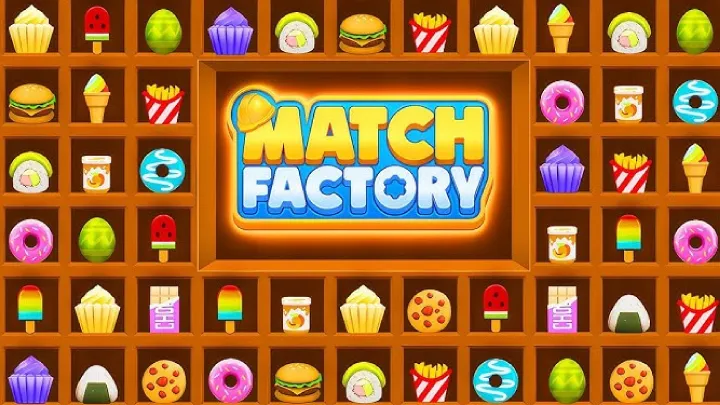




In Match Factory, one of the biggest barriers separating average players from advanced players is not reaction speed or experience. Instead, it is the ability to efficiently recognize objects under pressure while maintaining complete control of the board.
Many players reach a point where levels suddenly feel impossible. Timers seem too short, boards become overcrowded, and hidden objects appear nearly impossible to locate. As a result, players often burn through valuable boosters, lose streaks, and become stuck on difficult stages for days.
The truth is that high-level Match Factory gameplay is not primarily about matching objects quickly. It is about managing information more effectively than the game expects. Elite players develop systems for scanning boards, prioritizing targets, controlling visibility, and planning several moves ahead. These habits allow them to complete difficult levels consistently while using far fewer resources.
This guide focuses deeply on one of the most important topics in Match Factory: how to improve object recognition efficiency and board management to clear difficult levels consistently without relying on excessive booster usage.
Understanding Why Most Players Fail Difficult Levels
Many players blame hard levels on bad luck.
However, difficult stages are usually lost because of inefficient information processing.
The hidden challenge behind Match Factory
The game tests:
- Visual recognition
- Pattern detection
- Prioritization
- Time management
What usually causes failure
Most players spend too much time:
Searching
Looking for missing objects repeatedly.
Rechecking
Scanning areas they already examined.
Guessing
Making decisions without a plan.
Key insight
The biggest enemy in Match Factory is not the timer. It is wasted attention.
Building a Strong Foundation During the First Thirty Seconds
The opening phase of every level is critical.
Strong starts often lead to easy finishes.
Why the beginning matters
The board contains the maximum amount of information early.
This is the best moment to identify:
- Rare objects
- Hidden clusters
- Problem areas
Advanced opening strategy
Perform a quick board survey
Spend a few seconds understanding the layout.
Identify object density
Notice where large stacks are concentrated.
Common beginner mistake
Many players start matching immediately and lose valuable information before forming a strategy.
Learning the Rare Object Priority System
Not all objects have equal importance.
Some objects create significantly more problems than others.
What are rare objects?
Rare objects appear only a few times on the board.
Why they matter
Rare items become difficult to locate later.
Hidden copies often remain buried beneath layers.
Priority ranking
Highest priority
Rare objects.
Medium priority
Objects blocking visibility.
Lowest priority
Common objects.
Advanced tip
Removing rare objects early prevents frustrating late-game searches.
How to Open the Board Efficiently
Visibility is one of the most valuable resources in Match Factory.
Why visibility matters
Visible information allows better decisions.
Hidden information creates uncertainty.
Board-opening strategy
Clear central stacks first
The center often hides multiple layers.
Create visual windows
Expose deeper sections quickly.
Avoid this mistake
Do not remove random objects from every corner.
This creates scattered visibility instead of meaningful information.
Key principle
The more of the board you can see, the easier every future decision becomes.
Mastering Visual Scanning Patterns
Professional puzzle players rarely search randomly.
They follow structured scanning systems.
Why scanning systems work
The brain processes information more efficiently when following a consistent pattern.
Effective scanning methods
Top-to-bottom scan
Move downward methodically.
Left-to-right scan
Review sections systematically.
Benefits
- Fewer missed objects
- Faster recognition
- Reduced mental fatigue
Advanced insight
Consistency improves accuracy more than speed.
Managing Time Without Increasing Stress
Many players panic when the timer drops.
Ironically, panic causes even more mistakes.
What panic does
Players begin:
- Rushing searches
- Missing obvious objects
- Changing priorities constantly
Better timer management
Divide the level into phases
Early phase:
Board opening.
Middle phase:
Object clearing.
Final phase:
Cleanup.
Why this helps
Breaking the timer into sections creates mental control.
Key insight
A calm player with twenty seconds remaining often performs better than a panicked player with one minute remaining.
Using Object Clustering to Improve Efficiency
Object clustering is one of the strongest advanced techniques.
What clustering means
Identifying multiple copies before selecting any of them.
Why it works
You avoid repeatedly searching for the same object.
Example process
- Find first object.
- Locate second object.
- Locate third object.
- Complete the match immediately.
Benefits
- Faster completion
- Better memory retention
- Reduced visual confusion
Advanced rule
Never select an object unless you already know where the remaining matches are located.
Avoiding the Most Common Mid-Game Mistakes
The middle section of a level is where most failures occur.
Why the mid-game is dangerous
The board becomes partially opened.
Information increases dramatically.
Common mistakes
Switching priorities constantly
Players abandon plans too quickly.
Ignoring hidden layers
Buried objects become future problems.
Chasing easy matches
Convenience replaces strategy.
Solution
Continue following your priority system even when easier options appear.
Key principle
Discipline wins more levels than speed.
Preparing for the Endgame Before It Arrives
Great players prepare for the final phase early.
Why endgames become difficult
Problem objects remain unresolved.
Hidden layers still exist.
Rare objects are undiscovered.
Endgame preparation checklist
Remove difficult objects early
Prevent future bottlenecks.
Keep visibility high
Avoid large hidden zones.
Track remaining categories
Know what still needs to be matched.
Advanced insight
The easiest way to win the final thirty seconds is to solve the final thirty seconds three minutes earlier.
Using Boosters Like an Expert
Boosters should support strategy, not replace it.
When boosters are most effective
Information shortages
You cannot locate necessary objects.
Critical timer situations
A small advantage prevents failure.
When not to use boosters
- Immediately after mistakes
- During emotional frustration
- Without understanding the board
Booster hierarchy
- Reveal information
- Create visibility
- Save runs
Key principle
A booster used strategically is an investment. A booster used emotionally is often wasted.
Creating a Long-Term Improvement Routine
The best Match Factory players improve through analysis.
After each difficult level ask:
Where was most time lost?
Searching?
Hidden layers?
Rare objects?
What caused mistakes?
Poor visibility?
Panic?
Bad prioritization?
Training goals
Focus on improving:
- Recognition speed
- Search efficiency
- Board awareness
- Timer management
Long-term benefits
Small improvements compound dramatically over hundreds of levels.
Final insight
The strongest players are not those who play the fastest. They are the players who make the fewest unnecessary decisions.
Conclusion
Mastering Match Factory requires much more than quick tapping and fast reactions. The most successful players develop systematic approaches to object recognition, visibility management, target prioritization, and timer control. By learning to identify rare objects early, open the board strategically, follow structured scanning patterns, and prepare for the endgame from the beginning of the level, players can dramatically improve their success rate while reducing dependence on boosters. Over time, difficult levels become less about surviving the timer and more about executing a repeatable strategy that consistently produces results. In Match Factory, efficiency always beats speed, and information management ultimately determines victory.