.webp) critplay.com
critplay.comThe Evolution of Emergent Ragdoll Physics and Dynamic Unit Balance in Totally Accurate Battle Simulator
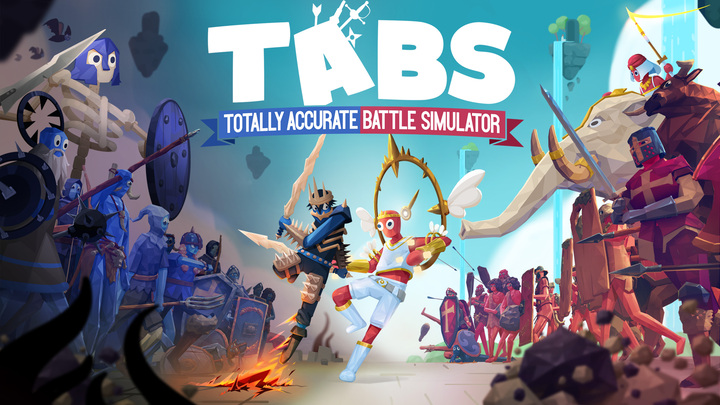
When Landfall Games introduced Totally Accurate Battle Simulator (TABS) to the indie gaming space during its initial alpha stages, it stood out not merely as a casual comedic strategy title, but as a groundbreaking study in physics-driven gameplay. Unlike conventional real-time strategy games that rely on rigid collision boxes and deterministic animation trees, TABS operates almost entirely on active ragdoll physics, spring-joint mechanics, and real-time procedural animations. Every swing of a broadsword, thrust of a spear, or firing of a catapult is governed by live physics calculations within Unity's engine. This foundational architecture turned traditional unit design on its head: instead of tweaking arbitrary numeric attributes inside a database, developers were forced to engineer kinetic forces, mass distributions, and mechanical interactions to maintain gameplay stability.
The deep mechanical issue that has perpetually defined TABS throughout its development lifecycle—from the 2016 open alpha to early access and full release—is the delicate tug-of-war between physical absurdity and tactical predictability. How do developers balance a game where unit performance is inherently stochastic? When hitboxes stretch, limbs flex via virtual springs, and collision geometries interlock unpredictably, standard balance philosophies break down completely. This deep dive explores the systemic mechanics behind TABS's ragdoll engine, analyzing how mechanical physics, emergent AI behavior, mass-to-force ratios, and custom user modifications transformed a chaotic sandbox into a structured, highly nuanced competitive strategy system.
Early Alpha Chaos: The Unconstrained Physics Baseline (2016)
During the 2016 open alpha phase, TABS functioned as an unrefined playground of extreme physics calculations. Units possessed lightweight ragdoll rigs with high-gain spring controllers that attempted to force joints into upright positions. However, these early ragdoll models suffered from severe kinetic instability. Because collision hulls were tightly packed without sufficient dampening parameters, units frequently clipped into one another, storing potential energy before exploding violently across the arena floor. The early version of the Peasant unit, for example, lacked sufficient weight distribution in its leg joints, leading to immediate collapse when swarmed by opposing forces.
This structural volatility severely impacted combat predictability. Ranged units like the Archer fired projectiles that interacted with air resistance and mass vectors, but the lack of trajectory stabilization caused arrows to spin wildly in mid-air. Melee units like the Viking Shield Bearer often accidentally launched their own allies into the air when collision bounds clipped during close-quarters combat. While this unpredictable behavior generated endless viral entertainment, it made strategic campaign planning almost entirely a matter of trial and error rather than tactical calculation.
Landfall recognized that for TABS to evolve from a novelty simulator into a sustainable strategy game, the ragdoll physics framework required a complete architectural overhaul. The fundamental physics engine needed constraints—not to remove the comedic ragdoll dynamics, but to make those dynamics repeatable enough that tactical positioning and unit counters actually mattered.
The Problem of Kinetic Energy Storage
In early Unity builds, ragdoll joints were linked using basic configurable joints with high spring constants. When two dense armies collided, the engine attempted to resolve hundreds of overlapping collider boundaries simultaneously. This produced massive spikes in kinetic energy, transforming basic sword swings into multi-ton kinetic impacts that sent units flying across the map.
Unstable Mass Scales and Uncapped Angular Velocity
Early boss units like the Super Peasant and Dark Peasant suffered from uncapped angular velocity. When these entities rotated their limbs to attack, the rotational force escalated exponentially, causing them to clip through terrain boundaries and crash the simulation thread entirely.
The Physics Overhaul: Implementing Active Ragdolls and Spring Joints
To resolve the chaotic energy bursts of the alpha builds, Landfall implemented a sophisticated active ragdoll system driven by proportional-integral-derivative (PID) controllers and customized spring joints. Instead of letting ragdolls drop completely limp or forcing rigid keyframe animations, units were given procedural muscular forces. The system constantly evaluated the difference between a unit's current physical pose and its target physics pose, applying corrective torque to each joint in real time to keep the character upright while allowing environmental forces to deform their posture naturally.
This procedural approach meant that a unit walking uphill would automatically adjust its center of mass, shifting its hips and torso dynamically. If an arrow struck a Knight's shoulder, the active ragdoll system calculated the transfer of momentum, causing the Knight's upper body to buckle backward while its leg joints actively worked to counteract the displacement and maintain balance. This created a convincing sense of weight and physical presence that static animations could never replicate.
The introduction of dynamic joint torque allowed developers to fine-tune unit traits through physics parameters rather than simple hit-point values. A heavy tank unit like the Executioner was assigned high mass, low joint stiffness, and high torque limits, enabling it to absorb impacts without flinching. Conversely, agile units like the Taekwondo fighter were given low mass, explosive rotational impulse forces, and high joint spring rates to execute rapid aerial kicks.
Active Ragdoll Architecture
- Target Posture Generation: Procedural goal poses generated dynamically based on unit movement vectors and state logic.
- PID Controller Evaluation: Real-time calculation of rotational torque required to bridge the gap between physical ragdoll pose and target pose.
- Physics Solver Integration: Application of calculated torques directly onto Rigidbody joints within Unity's PhysX pipeline.
Mass, Inertia, and Center-of-Gravity Engineering
As TABS moved toward Early Access, the focus shifted from overall ragdoll stability to individual unit physics profile balance. Central to this effort was the recalibration of mass, inertia tensors, and center-of-gravity (CoG) placement across all faction units. Landfall developers discovered that altering a unit's center of gravity by a fraction of a meter radically altered its combat performance and survival rate.
For instance, the Clubber was initially prone to tripping over its own feet due to a top-heavy torso mesh. By lowering its center of gravity toward the pelvis and increasing the friction coefficient on its feet, developers turned a clumsy hazard into a reliable early-game frontline brawler. Similarly, siege engines like the Catapult and Ballista required precise mass distribution to prevent them from tipping over backward upon firing their heavy projectiles.
Units holding two-handed weapons faced distinct physics challenges. The Greatsword unit required its weapons to possess physical collision properties so they could clash with enemy swords or wooden shields. However, if the Greatsword's mesh was too heavy, the unit would pull itself over forward during a swing. Developers solved this by introducing virtual counterweights inside the unit's lower torso and applying directional dampening to the arm joints during attack animations.
Center-of-Gravity Calibrations across Unit Types
In traditional video games, a weapon is a cosmetic mesh attached to a bone transform that triggers a raycast or hit-box overlap to deal damage. In TABS, a weapon is a fully reactive physical object with mass, drag, collision geometry, and momentum transfer capabilities. When a Berserker swings its axes, the damage delivered to the opponent is a direct mathematical function of the weapon's mass multiplied by its velocity at the exact frame of impact.
This kinetic damage formula meant that weapon length and swing arc directly dictated lethal efficiency. Long weapons like the Pike possessed immense tip velocity during a forward thrust, enabling them to deal catastrophic point-damage. However, the physical length of the Pike created a major mechanical vulnerability: once an enemy bypassed the tip, the long shaft exerted lever torque against the user's arm joints, preventing the Pike user from turning or attacking at close range.
Furthermore, weapon-to-weapon collision interactions allowed for emergent defensive tactics. Shields in TABS are not passive stat modifiers; they are physical physical barriers that absorb kinetic energy. A Squire carrying a wooden shield can block incoming arrows and deflect broadsword swings simply because the incoming collision primitive strikes the shield mesh first, transferring momentum into the Squire's arm joints rather than dealing damage to its body mesh.
Physics-Based Damage Principles
The damage calculation in TABS incorporates real-time vector math derived from Unity's collision events:
$$\text{Impact Damage} = k \cdot (m_{\text{weapon}} \cdot \|\vec{v}_{\text{relative}}\|^2) \cdot \cos(\theta)$$
Where $m_{\text{weapon}}$ is the assigned physical mass of the weapon, $\vec{v}_{\text{relative}}$ represents the relative velocity vector between weapon and target collider at contact, $\theta$ is the angle between the impact force vector and the surface normal, and $k$ is a balancing coefficient specific to the weapon type.
Mechanical Implications of Lever Torque
Longer weapons generate higher angular momentum at the tip, maximizing output damage. However, when an enemy strikes the haft of the weapon, the inverse torque applied to the wobbly joints easily disarms or knocks down the wielder.
Projectile Dynamics and Trajectory Stabilization
Ranged combat in TABS presents another layer of ragdoll physics complexity. Unlike hitscan systems, every arrow, rock, cannonball, and spear thrown in TABS is a simulated rigid body with gravity, air resistance, and wind-drag coefficients. The trajectory of a projectile is calculated continuously from the moment it leaves the bowstring or catapult lever until it impacts a target or the environment.
Archer units do not simply point and shoot; they execute procedural targeting calculations based on target velocity, range, and current wind parameters. However, because archers themselves are active ragdolls, their own posture directly affects aiming accuracy. If an archer is standing on an incline or jostled by a nearby ally, its bow angle shifts slightly, introducing organic variance into the volley trajectory.
Heavy projectiles, such as the boulders launched by the Catapult or the iron spheres fired by the Pirate Cannon, utilize mass-dense collision spheres. When these projectiles strike a clump of infantry, they do not simply trigger a death animation; they transfer immense kinetic energy through the crowd. Units struck directly take full physical damage, while adjacent units are launched into the air by the resulting shockwave and secondary ragdoll collisions.
Variations in Projectile Physics Characteristics
- Standard Arrows: Low mass, high aerodynamic drag, stabilized flight path via tail-fin simulation; easily deflected by shields or heavy armor.
- Catapult Boulders: Extreme mass, low drag, high rotary inertia; causes widespread kinetic displacement and crushes multiple light units upon impact.
- Musket Bullets: Near-instantaneous initial velocity, flat trajectory, extremely high point impact; line of sight can be disrupted by wobbly aiming frames.
- Poison Darts: Negligible mass, curved flight paths; delivers sustained damage-over-time debuffs independent of kinetic transfer.
Procedural Navigation and Pathfinding in a Physics Sandbox
Navigating a battlefield when the ground itself is littered with fallen, squishy ragdoll bodies presents a massive pathfinding challenge. Standard NavMesh navigation works well on pristine terrain, but as battles unfold in TABS, dozens of fallen units create dynamic physical obstacles that block pathways and alter terrain elevation.
Landfall addressed this by pairing Unity's underlying pathfinding architecture with local steering behaviors and ragdoll step logic. Units continually cast short-range rays forward to evaluate the local topography. When a unit encounters a pile of dead or writhing ragdolls, its procedural stepping system lifts its feet higher to scramble over the obstacle, adjusting hip torque to maintain balance.
Despite these systems, narrow choke points—such as the bridges on the Ancient or Medieval maps—frequently trigger pathfinding bottlenecks. As units push against each other to cross, their physical collision hulls compress. When the compressive force exceeds the joint limits of the units in the center, they are squeezed upward and launched into the air—an emergent side effect of combining rigid pathfinding goals with soft-body-style crowd dynamics.
Crowd Dynamics and Friction Coefficients
When dozens of units pack into tightly confined spaces, their collision hulls generate cumulative friction. If foot-to-ground friction is too low, armies slide around like ice skaters. If it is set too high, units trip over their own toes during rapid turns. Balancing ground friction against body-to-body friction was critical to establishing stable frontlines.
Dynamic Obstacle Avoidance
Each unit continuously recalculates its local path based on moving colliders, attempting to navigate around prone bodies while keeping its target within line-of-sight.
The Impact of Unit Possession on System Physics Mechanics
The introduction of the "Unit Possession" feature fundamentally altered how players interacted with TABS's physics engine. By allowing players to take direct first- or third-person control of any unit, Landfall exposed the active ragdoll locomotion system directly to manual keyboard and mouse inputs.
When controlled by the AI, unit actions are metered through fixed interval decision loops and smooth procedural blending. When controlled by a player, however, input commands are immediate. Striking, dodging, and turning inputs bypass AI pathfinding smoothing and immediately apply raw torque forces directly to the unit's virtual spine and limbs. This created a dramatic shift in unit performance capabilities.
A player controlling a Minotaur, for example, can execute continuous charge attacks by manually realigning the unit's rotational torque vector toward clusters of enemies, completely overriding the cooldown delays of the default AI script. Similarly, direct control enables players to exploit physics-based momentum techniques—such as jumping and swinging simultaneously to double the tip velocity of a weapon—allowing cheap, light units to punch far above their intended weight class.
AI Control vs. Manual Possession Mechanics
- Targeting Delays: AI units execute target acquisition every 0.2 to 0.5 seconds; player control provides instantaneous 60Hz directional targeting updates.
- Force Application: AI blends movement forces over time to prevent tripping; manual control applies immediate max-torque impulses, enabling rapid maneuvers at the risk of losing balance.
- Weapon Velocity Manipulation: Players can manually rotate the camera during an attack swing, adding centrifugal velocity to the weapon head to maximize kinetic damage.
The Unit Creator: Exposing Physics Variables to the Community
With the release of the official Unit Creator update, Landfall opened up TABS's internal physics parameters directly to the player base. Users were no longer restricted to pre-packaged unit builds; they could now adjust weight multipliers, scale joint forces, assign custom attack animations, and equip weapons with custom size and speed modifiers.
Exposing these physics sliders immediately revealed the structural limits of the active ragdoll engine. Players quickly realized that setting a unit's scale to 5.0x while maintaining default joint spring strengths resulted in a giant floppy creature that collapsed under its own mass. Conversely, setting mass to 0.01x while boosting attack speed created hyper-velocity units that flew into orbit upon swinging a weapon.
To keep user-created units functional, Landfall built dynamic scaling relationships into the backend of the creator. When a player scales up a unit's height, the engine automatically scales its mass quadratically and scales joint spring constants linearly. This auto-scaling framework preserves basic structural integrity while still giving players enough freedom to craft chaotic, custom physics fighters.
Conclusion
Totally Accurate Battle Simulator stands as an impressive technical triumph in modern physics game design. By choosing to build its gameplay foundation entirely around active ragdoll physics, spring-joint constraints, and procedural collision dynamics, Landfall Games turned physical chaos into a nuanced strategy game. The evolution of TABS demonstrates that unpredictable physics systems can be engineered, balanced, and harnessed to create meaningful tactical depth. Through careful manipulation of joint torques, mass scales, inertia tensors, and collision geometries, the developers transformed wobbly ragdolls into a compelling competitive sandbox. TABS proves that wobbly, physics-driven chaos and deep, strategic sandbox design can coexist harmoniously.