




Mastering the Multi-Verse: The Deep-Dive Guide to Gacha Club Excellence
The genius of Gacha Club lies in its duality: it is simultaneously a high-level character engine and a complex tactical RPG. Developed by Lunime, the game offers a depth that many casual observers miss. To truly "beat" the game—whether that means creating world-class viral content or conquering the brutal Elemental Towers—one must look past the presets and understand the underlying engine.
This guide explores the technical nuances of Gacha Club, from the mathematical scaling of unit potential to the pixel-perfect adjustments required for elite character design. We are moving beyond the basics to provide the definitive manual for the dedicated Gacha enthusiast.
1. The Architecture of Character Design: Advanced Layering
Most players treat the "Adjust" menu as a secondary tool, but it is actually the primary engine for original creation. By utilizing the X and Y scales alongside rotation, you can repurpose items entirely. For instance, a "cape" can be shifted, flattened, and rotated to become a custom dress extension or a piece of shoulder armor. This level of manipulation is what separates a standard OC (Original Character) from a masterpiece.
Furthermore, understanding the layering system (Front, Mid, Back) is essential for complex posing. Using "Extra" slots for custom-built props—like a floating magical aura made from scaled-down hats or wings—allows for a level of detail the game doesn't explicitly offer in the main menu. It’s about seeing the items not for what they are named, but for the geometric shapes they provide.
Customizing Beyond the Palette
- Outline Theory: Never use pure black outlines. Use a darker shade of the base color (e.g., dark navy for blue hair) to make the character look "softer" or more integrated into the environment.
- Tinting for Atmosphere: Use the global Tint setting (around 10-20%) to unify a character’s color scheme. This creates a professional, cohesive look rather than a jarring assortment of random colors.
2. Navigating the Battle Core: The Elemental Hierarchy

The combat in Gacha Club functions on a strict elemental wheel. While the standard Water > Fire > Wind triangle is intuitive, many players ignore the Light and Dark dualism. These two elements deal extra damage to each other but have no inherent weakness to the basic elemental trio. This makes them the "glass cannons" of the game, perfect for high-speed blitz strategies in the Arena.
Beyond the wheel, you must account for the Corruption element found in later stages. Corrupted units are neutral to everything but take increased damage from focused "Ultimate" attacks. When building a team for the Shadow Tower, having a balanced "Tri-Element" core with one Light or Dark healer is the gold standard for versatility and survival.
3. The Math of Might: Stat Allocation and Potential
In Gacha Club, units are not created equal. Each unit has a growth rate that isn't always obvious from their base level. When leveling up, your gold is best spent on units with high Active Skill multipliers. A unit with a lower base ATK but a $5 \times$ damage multiplier on their skill will consistently out-perform a high-ATK unit with a defensive utility skill in PVE content.
Don't forget the Unit Awakening system. Reaching level caps is only the beginning; using duplicate shards to "Awaken" your units increases their base stats by a percentage, which scales exponentially as you reach higher tiers. If you are struggling with a boss, check your DEF stats—often, the issue isn't that you aren't hitting hard enough, but that your units lack the "Bulk" to survive the second wave of attacks.
4. Studio Mode Mastery: Narrative Flow and Posing
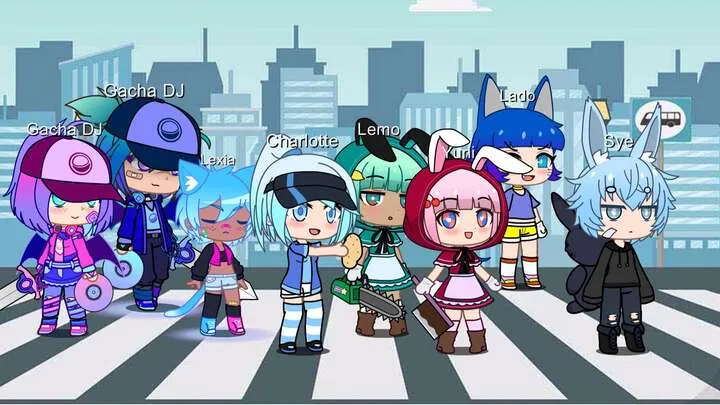
Studio Mode is where the community's heart beats. To create a compelling scene, you must master the Chat Bubble mechanics and the "Hide" features to create cinematic shots. By using multiple "Scenes," you can create a frame-by-frame animation style that mimics professional editing software within the app itself.
The "Pet" and "Object" slots are underutilized resources for storytellers. You can turn pets into background NPCs or even use them as "special effects" (like fireballs or falling leaves) by adjusting their scale to the maximum and positioning them behind the main character. This creates a 3D depth effect in a 2D space, adding layers to your storytelling.
5. Shadow and Light: Manual Shading Techniques
While Gacha Club has built-in shadows, "Pro" creators use the Face Accessories to create custom shading. By taking a simple circular accessory, coloring it black or dark purple, and lowering the opacity, you can place manual shadows under the hair or chin. This adds a level of grit and realism that standard presets lack.
Similarly, highlight techniques involve using white or light yellow accessories positioned on the "shiny" parts of the hair. When combined with the "Screen" or "Add" blending modes (if you are exporting to an external editor), these highlights make your character pop against the background, giving them a high-budget anime aesthetic.
6. The Economy of Gacha: Efficient Resource Management
Gems are a finite resource for F2P (Free to Play) players. The most common mistake is spending gems on the "Unit Gacha" too early. Instead, focus your early-game gems on Gacha Pulls for Gifts. Gifting your units increases their "Friendship Level," which provides massive permanent stat boosts that are often more effective than simply leveling up.
Priority Spending List:
- Gifts: To boost Friendship stats for your core team.
- Energy Refills: Only during 2x EXP or 2x Gold events.
- Unit Gacha: Only when aiming for a specific 6-star elemental lead to anchor your team.
7. Advanced Team Synergies: Buffs and Debuffs
In the late-game "Shadow Tower," raw power fails. You need a team that utilizes Status Effects. Units that provide "Stun" or "Freeze" can effectively skip a boss’s turn, which is vital when the boss has an AOE attack that can one-shot your team. Combine a "Stunner" with a "Cooldown Reducer" to create a "Stall Team."
The most potent combination is the ATK Up + DEF Down combo. By using a support unit to buff your main DPS (Damage Per Second) and a secondary unit to shred the enemy's armor, your total damage output can increase by over 200%. This is the only way to clear the level 100+ challenges where enemies have millions of HP.
8. Enhancing Aesthetics: The Secret of "Soft" Designs

There is a current trend in the Gacha community toward "Soft" or "Pastel" aesthetics. Achieving this isn't just about picking light colors; it’s about the "Outline" and "Sub-Color" relationship. For a soft look, your outlines should be only two shades darker than your fill color.
Avoid high-contrast colors like bright red and neon green unless they are specifically part of a "Glitch" aesthetic. For hair, use the "Fade" option to blend two similar colors (e.g., light pink to white). This creates a gradient that looks more natural and high-end, mimicking the coloring style of modern Japanese illustrators.
9. Mini-Game Optimization: Farming Gems Fast
Many players ignore the Mini-Games, but they are the most consistent way to earn gems without spending real money. Games like "Luni Sky" and "Mascot Toss" have predictable patterns. The key to "Mascot Toss" is to focus on the center of the screen and ignore the edges; your peripheral vision will catch the falling objects more accurately than trying to track every single mascot.
By mastering just one mini-game, you can earn hundreds of gems per hour. This allows you to bypass the "paywall" of the Gacha system and fully kit out your units with the best gear and friendship bonuses without ever opening your wallet.
10. Conclusion: The Path to Gacha Greatness
Mastering Gacha Club is a journey of both the left and right brain. On one hand, you have the creative, artistic freedom of the Studio—a place where your imagination is the only limit to what kind of characters and worlds you can build. On the other, you have the cold, hard numbers of the Battle mode, where strategy and elemental knowledge reign supreme.
The most successful players are those who can bridge this gap. Use your tactical rewards to fund your creative endeavors, and use your creative eye to build unique teams that stand out in the Arena. With patience and the techniques outlined in this guide, you will transition from a casual player to a true Gacha Club master.